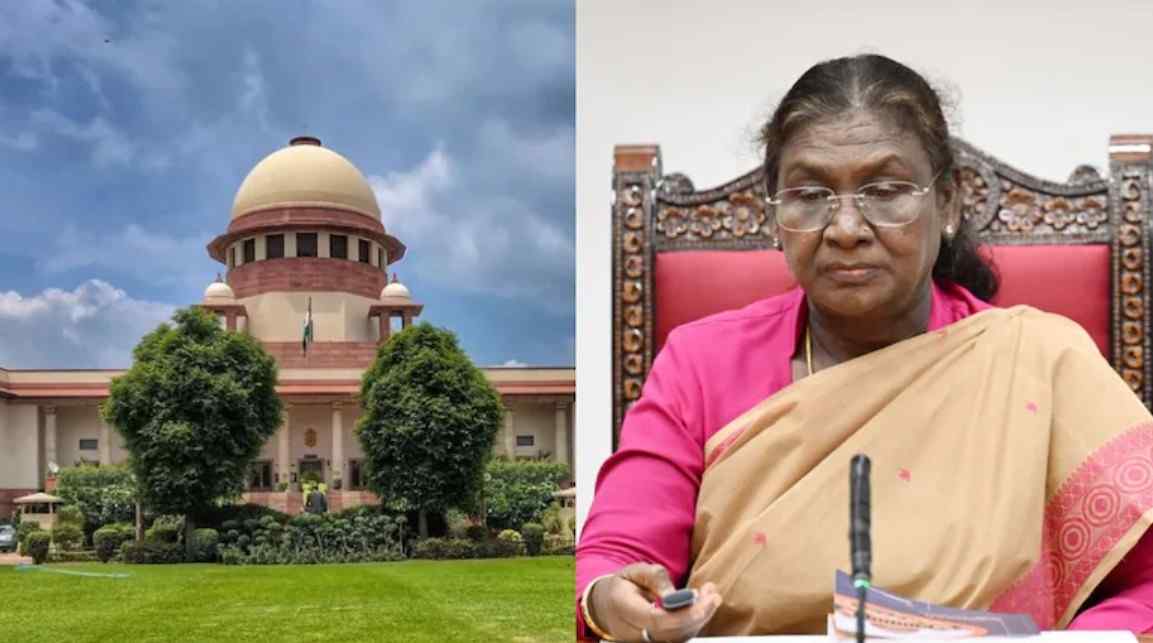
SC upholds governor’s discretion, but says long unexplained delay may invite judicial review
The Supreme Court of India has ruled that fixed timelines cannot be imposed on state governors (or the President) for granting assent to bills passed by legislative assemblies.
A five-judge Constitution bench — led by Chief Justice B.R. Gavai, along with Justices Surya Kant, Vikram Nath, P.S. Narasimha, and A.S. Chandurkar — delivered the verdict following a presidential reference under Article 143 of the Constitution.
Key Points from the Judgment
- The Court stated that imposing a strict timeline would go against the spirit of the Constitution.
- It struck down the concept of “deemed assent”, saying that automatically counting a bill as approved after a deadline is “virtually a takeover” of executive functions by the judiciary.
- The judges affirmed that while governors have discretion under Article 200, they must decide within a “reasonable period.”
- The Court also rejected any timeline being imposed by courts as a blanket rule.
- However, it said excessive, unexplained delays can be challenged. Judicial review remains possible when the governor’s inaction stalls legislative business.
Why This Ruling Matters
- Preserves Constitutional Discretion: Governors retain their constitutionally granted discretion to approve, return, or reserve bills.
- Limits Judicial Overreach: The Court avoids being too prescriptive, saying courts should not micromanage executive decisions.
- Checks Abuse: While there’s no hard deadline, the Court warns that a governor cannot indefinitely sit on a bill without good reason.
- Federal Balance: The verdict underscores the importance of dialogue between state legislatures and governors, rather than judicial compulsion.