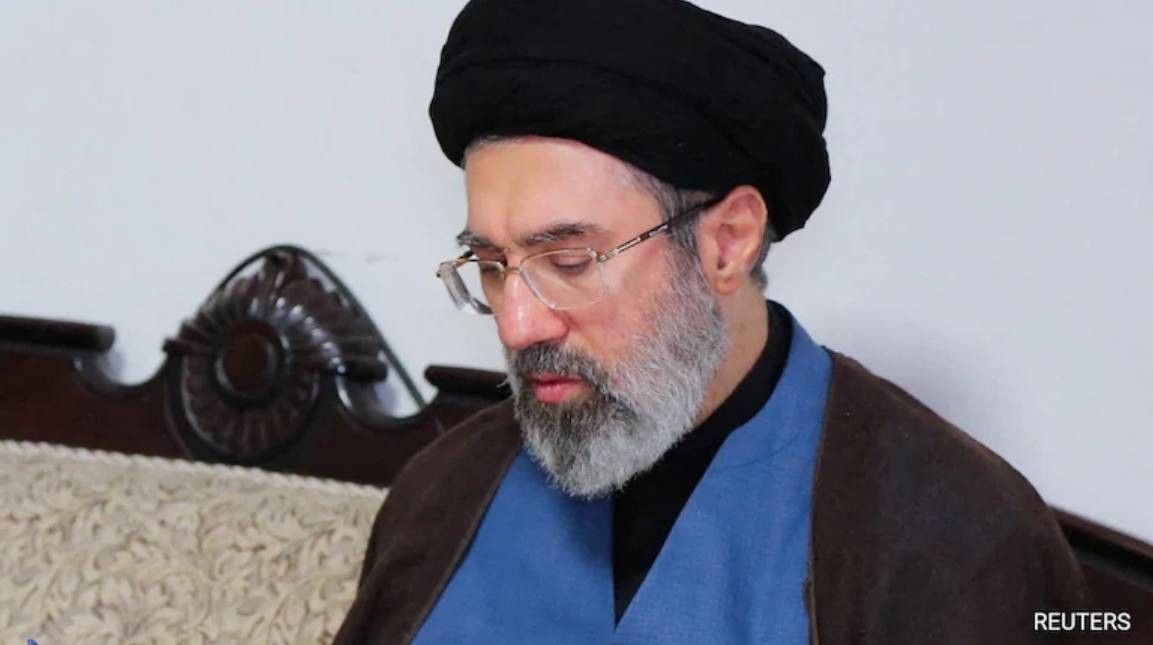
Mojtaba Khamenei’s hidden real estate and investment network spans London, Dubai, Europe and beyond, routed through shell companies and intermediaries.
A Hidden Global Empire Behind Luxury Real Estate
Mojtaba Khamenei — the second-eldest son of Iran’s Supreme Leader Ayatollah Ali Khamenei — has quietly amassed a substantial global property and investment empire over more than a decade. According to a year-long Bloomberg investigation detailed in a leading news channel’s report, his network of overseas assets includes luxury properties, hotels and commercial holdings in Europe, the Middle East and North America, all masked through layers of shell companies and intermediaries.
None of the assets are held in Khamenei’s name directly. Instead, ownership appears to flow through a web of corporate entities in jurisdictions such as the UAE, Isle of Man, Saint Kitts and Nevis and other tax-friendly locales.
Luxury Properties in Prime Locations
Documents reviewed by investigators show Khamenei’s network controls or has controlled:
- Luxury mansions in London’s “Billionaires’ Row,” one purchased for over €33.7 million.
- Villas in Dubai’s elite neighbourhoods.
- Upscale hotels in Frankfurt, Germany and resorts on Mallorca’s coast in Spain.
- A high-end Toronto penthouse sold for C$10.5 million in 2020.
These holdings illustrate how the family’s financial reach extends far beyond Iran’s borders and often mirrors the lifestyles of Western elite investors.
Funding and Ownership Structures
Much of this vast investment portfolio is believed to be funded by oil revenue and sanctioned revenue streams, which were channelled offshore via complex financial networks. Experts say the structure was carefully designed to obscure beneficial ownership and evade international scrutiny.
A central figure in the network is Ali Ansari, a businessman sanctioned by UK authorities in 2025 for allegedly financing elements linked to Iran’s Islamic Revolutionary Guard Corps (IRGC). Many of the properties appear under companies where Ansari served as an active beneficial owner or director, acting as a financial conduit for Khamenei’s overseas interests.
Contrasting Public Image and Hidden Wealth
Iran’s official media often portrays the Supreme Leader and his family as austere and pious, devoted to Islamic values since the 1979 revolution. However, the revelation of a broad hidden wealth network — including luxury estates and European hotels — significantly contrasts with this image.
In a nation grappling with economic hardship and widespread protests, critics argue that such hidden wealth highlights the growing divide between the political elite and ordinary citizens.
Political and Strategic Implications
The extensive foreign property empire also has geopolitical implications. It reflects how Iran’s political elite has found ways to channel capital abroad despite long-standing U.S. and Western sanctions aimed at curbing financial support for Tehran’s political and military apparatus.
Some analysts view these assets not just as wealth storage, but as strategic financial buffers useful for regime elites in times of domestic or regional instability.
Official Responses and Controversy
Neither Mojtaba Khamenei nor the Supreme Leader’s office has publicly responded to questions about his involvement in these property networks. Ansari, through legal representatives, denies any financial ties to the Supreme Leader’s family and has stated an intention to challenge UK sanctions.
Western officials and anti-money-laundering experts have repeatedly pointed to lax beneficial ownership rules in global financial systems that allow such networks to thrive.
Legacy of Wealth and Power
Mojtaba Khamenei’s overseas empire illustrates a broader trend of elite financial entanglement across borders. It underscores how political power in Iran — already deeply rooted in religious authority and state institutions — extends into global financial markets, allowing regime insiders to safeguard wealth far from domestic constraints.