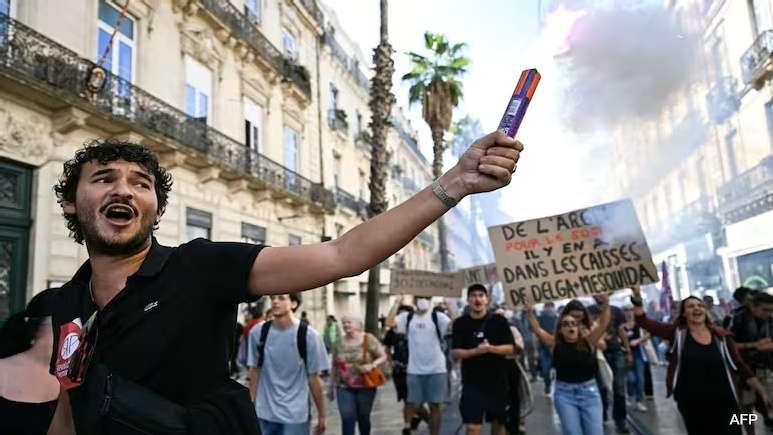
People across France protest against government policies, blocking roads and setting vehicles on fire, leading to hundreds of arrests.
France saw big protests on Wednesday, with people blocking roads, setting cars and buses on fire, and clashing with police. Nearly 200 people were arrested as the country faced a day of chaos.
The protests came just after President Emmanuel Macron appointed a new Prime Minister, Sébastien Lecornu, following the fall of the previous government. Protesters wanted to send a strong message to the new leadership.
What Happened?
- Protesters blocked roads and caused traffic jams in cities like Paris and Rennes.
- A bus was set on fire in Rennes, and a damaged power line stopped trains in the southwest.
- Police used tear gas and force to break up barricades and control the crowds.
- Despite a huge police presence of 80,000 officers, protests caused serious disruption.
Why Are People Protesting?
The protests, called “Block Everything”, started online over the summer. People are unhappy with:
- New government budget cuts and economic policies.
- Rising inequality and lack of opportunities.
- The recent political crisis after the Prime Minister lost support in parliament.
The movement is similar to the past Yellow Vest protests, which began over fuel taxes but grew into a wider anger against the government.
What’s Next?
The protests show many French citizens are unhappy with President Macron’s leadership and the new government. The new Prime Minister, Sébastien Lecornu, faces a tough challenge to calm the situation.
France may see more protests if the government does not address people’s concerns.