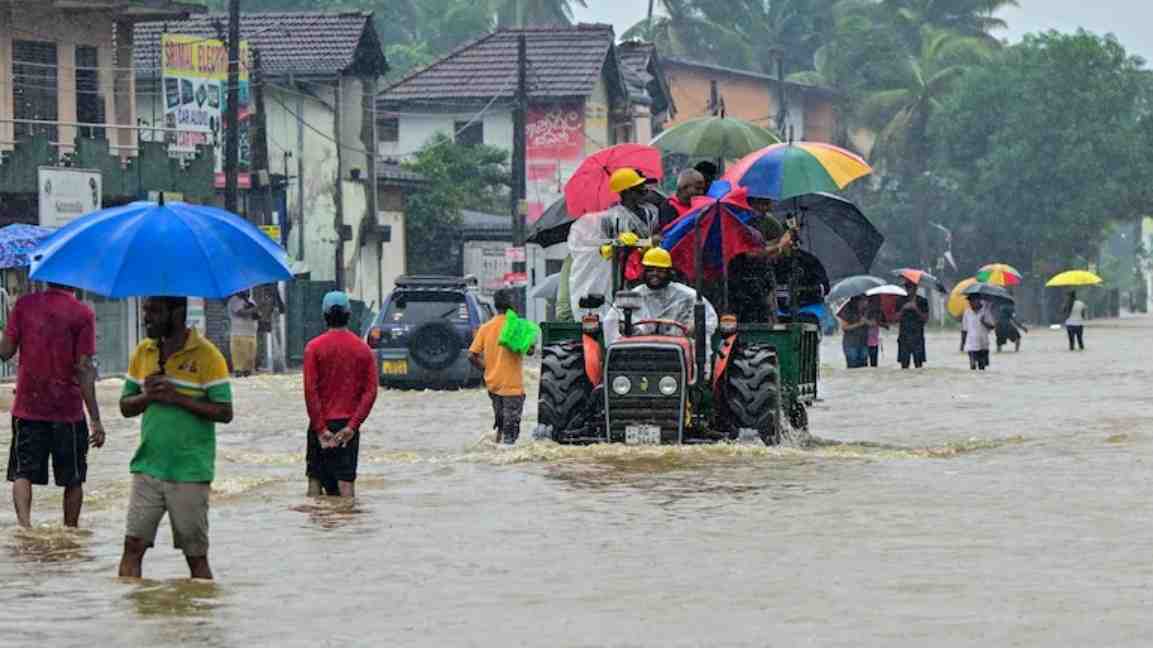
Government invokes emergency powers, appeals for international help
Sri Lanka has declared a state of public emergency after Disaster Management Centre (DMC) confirmed that the death toll from Cyclone Ditwah has climbed to 132, with 176 people missing. The devastation has triggered the widespread destruction of homes and massive displacement.
What Happened: Floods, Landslides, and Large-Scale Destruction
- Torrential rains and flooding caused by Cyclone Ditwah have obliterated over 15,000 homes across the island.
- Roughly 78,000 people have been relocated to state-run shelters as authorities struggle to provide basic relief.
- Several villages and regions have become inaccessible, as roads have been blocked by landslides or floods — complicating rescue and aid efforts.
- Power outages and breakdowns in water supply and communication networks have been reported in many affected areas.
Government Response: Emergency Rule & Aid Mobilization
- The emergency declaration gives sweeping powers to the government for rescue, relief and rehabilitation — including mobilization of the military: army, navy and air force are aiding evacuation and relief operations.
- Emergency laws allow rapid allocation of resources, mobilization of relief teams and regulation of affected zones.
- Sri Lanka has issued a formal appeal for international assistance to help cope with the scale of destruction.
Human Toll and Ongoing Risks
- Hundreds lost their homes overnight. Many families are now sheltering in relief camps with uncertain future.
- Access to clean water and basic sanitation remains a critical problem, especially in remote or landslide-hit regions.
- With landslides and floods still possible due to unstable terrain and continuing rainfall, relief teams warn that the human cost may rise further as search-and-rescue operations continue.
What Next: Relief Efforts and International Aid
Authorities are coordinating with armed forces, volunteers, and international partners to:
- Distribute relief supplies (food, water, medicines)
- Evacuate people stranded in flooded or cut-off regions
- Provide temporary shelters and medical assistance
- Assess destruction and begin rebuilding infrastructure
Meanwhile, Sri Lanka awaits incoming support from foreign governments and humanitarian agencies to handle the crisis and aid recovery.
Also Read : Cyclone Ditwah: Tamil Nadu Hit — Flights Cancelled, Schools Shut, India Sends Aid to Sri Lanka